Tarot, Oracle Cards or Angel Cards: Which Deck Should You Read?
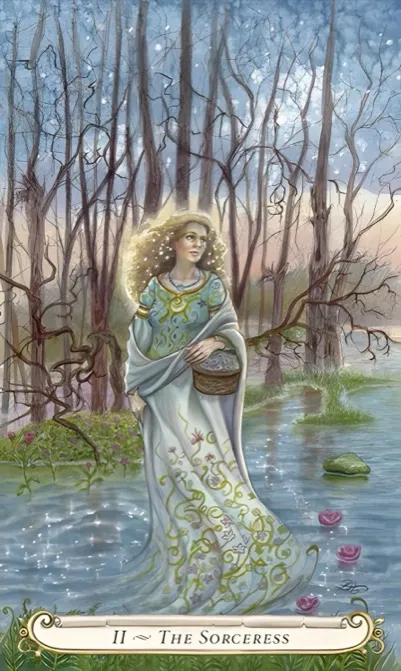
Walk into any bookshop's mind-body aisle and you'll find three families of decks sharing a shelf: tarots, oracle cards and angel cards. They look similar — beautiful boxes, illustrated cards, promises of insight — but they are different instruments, and they answer different kinds of questions.
Tarot: the structured mirror
A tarot deck always has the same skeleton: 78 cards, split into 22 Major Arcana and 56 Minor Arcana across four suits. That structure is the point. Because every deck shares it, five centuries of accumulated meaning travel with each card. When you draw The Tower, you're not just looking at a picture — you're tapping into a long conversation about sudden change, collapse and honesty.
Tarot's fixed structure makes it precise. The suits map to areas of life — Wands to desire and creative fire, Cups to emotion, Swords to thought, Pentacles to the material world — and the numbers trace an arc from beginning (Ace) to completion (Ten). A tarot card reading can therefore hold complexity: tension between what you feel and what you think, between where you are and where you're pulled.
Oracle cards: the open field
Oracle cards have no fixed structure at all. A deck might have 36 cards or 100; its theme might be moon phases, animal spirits, or single words like "Trust." Each oracle deck invents its own language, so oracle readings tend to be gentler and more impressionistic — less "here is the anatomy of your situation," more "here is a mood to carry today."
That freedom is why many readers keep both: tarot for the deep dive, an oracle card as the day's weather report.
Angel cards: guidance with a message
Angel cards are a branch of the oracle family with a devotional flavour. Instead of archetypes, they offer direct messages of comfort and encouragement — often literally written on the card. If tarot asks you to interpret and oracle cards ask you to feel, angel cards mostly ask you to receive. They shine when what you need isn't analysis but reassurance.
So which should you read?
- Choose tarot if you want depth, structure and a practice you can grow into for years. It has the steepest learning curve and the richest payoff.
- Choose oracle cards if you want intuitive, low-pressure guidance without memorising meanings.
- Choose angel cards if you're drawn to comfort and affirmation more than analysis.
The honest answer for most people: start with tarot, but read it the way an oracle deck is read — softly. That's the approach Lunox takes. The deck is a full 78-card tarot with complete card meanings, but every reading is written as guidance rather than verdict: what the card illuminates, what it asks of you, and one small ritual to act on it.
Do the cards "know" anything?
A card reading isn't a data feed from the future. It works more like a well-aimed question: the card gives your intuition something concrete to react to, and the reaction is the reading. That's why the same card can mean different things to different questions — and why the practice rewards honesty. Ask a vague question, get a vague mirror.
Whichever tradition you choose, begin the same way: one deck, one quiet minute, one honest question. Draw a single card — perhaps you'll meet The Fool, the card of clean beginnings — and notice what it stirs before you read a single word of its meaning. That noticing is the whole craft.
Put it into practice
Draw your own cards in Lunox — free tarot readings, all 78 card meanings and a dream journal.